Blog

Looking to break into Project Management?

Here are a few pointers for you…

The IT and Digital Industry within the UK is a rapidly growing and constantly evolving field, with a high demand for skilled professionals who can manage and coordinate projects effectively. Project managers play a vital role in ensuring that projects are completed on time, within budget, and to the required quality standards. In this blog post, we will explore the advantages of being a project manager within the IT and Digital Industry within the UK, including career development opportunities, recommended courses, and employment statistics.

Career Development

Project management is a highly sought-after skill within the IT and Digital Industry, and there are numerous career development opportunities available to those who have the necessary skills and qualifications. The Chartered Management Institute (CMI) states that project management roles are expected to increase by 33% in the next five years, with the average salary for a project manager in the IT and Digital Industry being £55,000 per year. Regional variations and cost of living increases will apply from Q4 2022.

Additionally, the Project Management Institute (PMI) states that project management is a transferable skill, and project managers can work in a variety of industries, including IT, engineering, construction, and finance to name a few. This means that project managers can move between different industries, giving them more career development opportunities.

Recommended Courses

To become a project manager within the IT and Digital Industry, it is recommended that individuals have a relevant degree in a relevant field, such as IT, engineering, or business management. Additionally, it is recommended that individuals have a professional project management qualification, such as the Project Management Professional (PMP) from the PMI or become PRINCE2 Practitioner.

There are also a number of courses available that are specific to the IT and Digital Industry, such as the ITIL Foundation and the AgilePM Foundation. These courses provide individuals with the knowledge and skills required to manage IT and digital projects effectively.

Industries that Use Project Managers

Project managers are used in a variety of industries, with the IT and Digital Industry being one of the most prominent. Within the IT and Digital Industry, project managers can work in a variety of roles, such as software development, IT infrastructure, and digital marketing.

Additionally, project managers are also used in other industries, such as engineering, construction, logistics, retail and finance. This means that project managers have a wide range of employment opportunities available to them, giving them more career development opportunities.

Employment Statistics

According to the Office for National Statistics (ONS), there were approximately 1.2 million people employed in the IT and Digital Industry within the UK in 2020. Of these, approximately 7% were project managers. This represents a significant number of employment opportunities for project managers within the IT and Digital Industry.

Additionally, the ONS states that the average salary for a project manager in 2020 within the IT and Digital Industry was £45,000 per year. This was higher than the average salary for a project manager in other industries, such as engineering and construction. This highlights the value that companies place on project managers within the IT and Digital Industry.

Conclusion

Project management is a highly sought-after skill within the IT and Digital Industry, with numerous career development opportunities available to those who have the necessary skills and qualifications. Project managers can work in a variety of roles and can also work in other industries, giving them more career development opportunities. It is recommended that individuals have a relevant degree and a professional project management qualification, such as the PMP or the PRINCE2 Practitioner, to become a project manager within the IT and Digital Industry. With 1.2 million people employed in the IT and Digital Industry and 7% of them being project managers, there are plenty of employment opportunities and we haven’t even touched on the interim market yet…

Whatever career choice to make, the very best of luck to you but if you’re at a cross and you want something to ignite your internal fire again, Project Management could be for you. Let us know what successes you’ve had, we’d love to hear from you. Contact us at [email protected].

Having trouble finding your first job in the IT industry?

Here is a few useful tips to help you kick-start your year and career…

Here are 5 top tips to help secure your first job:

  1. Tailor your CV and cover letter to the job you’re applying for. It’s important to highlight the skills and experience that align with the requirements of the position. Studies have shown that customising your application to the job can increases your chances of getting an interview by up to 50%.
  2. Network, Network, Network! Building relationships with people in your field can be incredibly valuable when it comes to finding job opportunities. In fact, according to a study by the job search website, LinkedIn, 85% of jobs are filled through networking.
  3. Be proactive and persistent. This means going beyond just applying to job postings online and reaching out to companies and recruiters directly. Research shows that the average job seeker applies to an average of 24 jobs before getting an offer, so persistence is key.
  4. Highlight transferable skills. If you are transitioning from one field to another or have limited experience in your desired field, it’s important to emphasize transferable skills that demonstrate your ability to adapt and learn quickly. A study by the Society for Human Resource Management (SHRM) found that employers place a strong emphasis on transferable skills such as problem-solving, teamwork, and communication.
  5. Participating in extracurricular activities and volunteer work can help you gain valuable skills, experience, and connections that can help you stand out to employers. According to a survey by the Corporation for National and Community Service, 72% of employers are more likely to hire candidates with volunteer experience.

It’s important to note that, these tips are not a guarantee of getting a job, but they can certainly increase the chances of getting an interview, and ultimately, a job offer.

Happy New Year for 2023

Follow us on our various Social Media channels for job updates, industry insights and much more. Simply search for Touchscreen Talent on Facebook, Twitter, Instagram and LinkedIn. Thank you and we wish you a prosperous and successful 2023.

Happy Holidays !!

Merry Christmas and Happy New Year to everyone who supports us. You’ve helped us come along way and we’ve had a great journey over the last 4 years. Thank you – Happy Holidays!! See you in 2023!!

Increases in Minimum Wages

Every year in April, new and updated employment law provisions come into force. The new National Minimum Wage increases have now been announced.

You may be asking yourself, why is this important?

Employers will be expected to comply with the new National Minimum Wage rates from 1 April 2023. Is your HR & payroll department ready?

The new rates will be:

Age 23 or over: £10.42
Age 21 to 22 – £10.18
Age 18 to 20 – £7.49
Age 16 to 17 – £5.28
Apprentice – £5.28

This reflects an increase of 9.7% to 10.9% across the categories. The increases are intended to support the living standards of lower paid workers in light of the cost-of-living crisis and to fall in line with the Government’s intention to reach two-thirds of median earnings of the relevant population by 2024.

The National Living Wage has therefore also increased to £10.42 (being the highest rate National Minimum Wage). This differs from the ‘Real Living Wage’ which is a wage set by the Real Living Wage Foundation. It’s entirely voluntary, but many employers choose to pay it anyway. The National Living Wage is based on median earnings, whereas the Real Living Wage rates are higher because they are independently calculated based on what people need to get by. For 2022/2023, the Real Living Wage is £10.90 (and £11.95 for London wages).

Should you require further information or to have some salary benchmarking information, please get in touch. We are happy to help you.

New Service Announcement – Leadership profiling is back!

You’ve been asking for it and now we’ve got it in the tool kit and ready for deployment.

By popular demand, we can now offer you DISC profiling as part of our service offering to you when hiring talent into your leadership teams.

Is this better for me? From today, In addition to receiving recorded video content, a profile and CV, you will also receive a leadership profile too.

A complete information package to help clients reach fast and correct decisions yet offering candidates multiple ways to highlight their expertise.

So what is DISC? The 4 core DISC behaviours measured are :

Dominance – How we respond to problems & challenges.
Influence – How we respond to people & contact.
Steadiness – How we respond to pace & consistency.
Compliance – How we respond to procedures & constraints.

If you are looking to hire into your leadership team, get in touch and find out how we can give you peace of mind and help you save time, money and hassle.

Green Partnership Announcement coming soon. Going Green in 2023!

The environment needs looking after! You agree – right? It’s an opinion shared by most of us at the moment and like most of us, the environment is extremely precious and at the front of our minds too.

Unlike certain heavy industries who are positioned at the other end of the green environmental spectrum, office based work and duties don’t often conjure up images of producing much of a Carbon footprint, but you will be surprised.

Energy is being consumed all the time. Whether, it’s travelling to work in a car, visiting clients and customers via public transport or having sub contractors working on our customers sites.

The great news is, we are in advanced talks with a partner to help offset the amount of Carbon production we forecast; not only by us but also how much our 3rd parties produce in a calendar year. Like you, we want to contribute too.

We are determined to offset our carbon production and we are reviewing a number of creative solutions to do so from the beginning of 2023. Keep your eyes peeled for the Partner announcement and further news soon.

Psychological safety in the modern workplace

What is psychological safety?

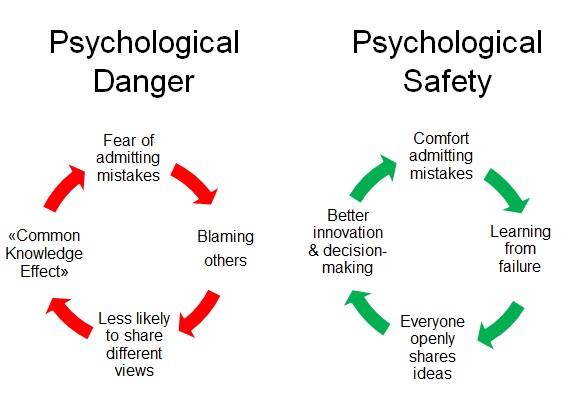
Psychological safety is being able to show and employ oneself without fear of negative consequences of self-image, status or career. It can be defined as a shared belief that the team is safe for interpersonal risk taking. In psychologically safe teams, team members feel accepted and respected.

How to create psychological safety at work

  • Show your team you’re engaged
  • Let your team see you understand
  • Avoid blaming to build trust
  • Be self-aware and demand the same from your team
  • Nip negativity in the bud
  • Include your team in decision making
  • Be open to feedback
  • Champion your team

When employees feel comfortable asking for help, sharing suggestions informally, or challenging the status quo without fear of negative social consequences, organisations are more likely to innovate quickly, unlock the benefits of diversity, and adapt well to change – all capabilities that have only grown in importance during the COVID-19 crisis. Yet a McKinsey Global Survey conducted during the pandemic confirms that only a handful of business leaders often demonstrate the positive behaviours that can instil this climate, termed psychological safety, in their workforce.

As considerable prior research shows, psychological safety is a precursor to adaptive, innovative performance—which is needed in today’s rapidly changing environment—at the individual, team, and organisation levels. For example, successfully creating a “network of teams”—an agile organizational structure that empowers teams to tackle problems quickly by operating outside of bureaucratic or siloed structures—requires a strong degree of psychological safety.

Fortunately, specific research suggests how organisations can foster psychological safety. Doing so depends on leaders at all levels learning and demonstrating specific leadership behaviours that help their employees thrive. Investing in and scaling up leadership-development programs can equip leaders to embody these behaviours and consequently cultivate psychological safety across the organisation.

A recipe for leadership that promotes psychological safety

Leaders can build psychological safety by creating the right climate, mindsets, and behaviours within their teams. In our experience, those who do this best act as catalysts, empowering and enabling other leaders on the team—even those with no formal authority—to help cultivate psychological safety by role modelling and reinforcing the behaviours they expect from the rest of the team.

McKinsey & Company research finds that a positive team climate—in which team members value one another’s contributions, care about one another’s well-being, and have input into how the team carries out its work—is the most important driver of a team’s psychological safety. By setting the tone for the team climate through their own actions, team leaders have the strongest influence on a team’s psychological safety.

Moreover, creating a positive team climate can pay additional dividends during a time of disruption. Their research finds that a positive team climate has a stronger effect on psychological safety in teams that experienced a greater degree of change in working remotely than in those that experienced less change during the COVID-19 pandemic. Yet just 43 percent of all respondents report a positive climate within their team.

In summary, the majority of organisations still have work to do to ensure their employees feel safe in work and amongst their leaders. Our own research confirms that employees are leaving to improve upon their working conditions in addition to increased pay to cope with the increases in costs of living and the continued investment into personal wellbeing.

Sources: McKinsey and Company, Personnel today, World economic forum, CCL & Touchscreen Talent Limited

How will 2022 shape up?

One subject that will get a lot of airtime is, “the great resignation”. A term coined by a US commentator – Anthony Klotz. You may also hear about a possible boom period throughout the 20’s…

What is certain within the UK workforce is that there has been a shift in the mindset and appetite of employees to secure a greater sense of work life balance. What is meant by this is a way of earning money that enables people to live and work with a blurred boundary rather than a perception or divide that defines the two as separate entities.

A portion of the mature workforce is heading towards retirement, some acting upon the decision to leave their industries prematurely because of the effects of the pandemic and the need to fulfill lifetime ambitions. Millennials and Gen Z workers are flourishing presently because of the diversity and demand for companies across all industries scaling-up.

Changes in IR35 legislation has had an impact on the contractor marketplace thus dividing the opinion of those people who have legitimately operated as a business and governed their financial affairs for many years. Some have continued to operate within IR35 boundaries and others have chosen not to thus increasing the number of interim assignments. Government intervention and initiatives are driving new hiring strategies and training opportunities through schemes like Kickstart thus creating even greater demand for unskilled and entry level workers.

So as the reset switch was pushed in September last year, is there no surprise that we see record levels of jobs being advertised, salaries being increased due to skills shortages and growing demand whilst publication after publication is advocating the need to offer distributed job opportunities or “hybrid” operating models?

All those that contribute to the economy stood on the start line in September and as we can all acknowledge, some companies will start off quicker than others, some will adapt and take risks, some may not fair well, some will get acquired by other companies and the list of possibilities goes on. With this in mind, a performance pyramid is beginning to take shape with those high achieving and innovative companies at the top and those still established themselves fighting with the masses to make their way up.

From our research last year, we observed that 80% of people who took our economic outlook survey stated they had a positive experience throughout the Pandemic from their employers yet over 50% of people were either looking for a new job or will be doing so in the following 3 months. Additionally, over 50% of people also thought that they would be in a different job in 6 months’ time. This stretches throughout Q4 2021 and Q1 2022.

Is the Great resignation an actual – Get up and leave or is it a reshuffle of the Talent pack? Is it an economic cull to restore a sense of order to highlight the innovation, flexibility and the calibrated emotional connection organizations’ will have formed with their workforce?

2022 will see an increase in M&A activity, it will report skills shortages and the gaps between the competence levels of those starting out their careers compared to those who operated before them a number of years ago. This should not be a surprise as there are significantly fewer people qualified or were even born to backfill jobs left by those exiting the industry. The were 50% fewer babies born in 1980 compared with 1960.

Throughout the pandemic, certain industries have lost valuable years to upskill and professionally develop their workforce. The chances of natural career development have been stunted. Specifically in subjective topics like Project Management and jobs that require higher levels of EQ to execute the task in hand.

There are wide-ranging reports of demands for salary increases; especially, in areas where there are recognized skills shortages yet is it reasonable to think that companies can raise salaries across a business and make significant wholesale changes? When an individual demands more money, the person is not asking for the company to meet their demands, the request is to make wholesale changes in order to accommodate the new person. Everyone needs to be treated more or less equally or you will damage your culture, brand, and competitive value. Without this, there is no job in the first place. Afterall, it is the entire workforce which creates these elements, yet one person can negatively disrupt it.

Emulating the 1920’s and the boom years which followed the great war, there is a sense that economic conditions are somewhat similar. If that is the case, will we see a leveling up of emerging countries seize their time to compete and challenge the dominance of the “West”?

Mature and performing economies will continue to invest and innovate and with this in mind, will there be a resurgence in the contractor marketplace to balance out demand and delivery?

As its recorded and recognized, people within the age bracket of 30 – 45 reach certain milestones and achieve a sense of actualization, so will Generation X and Generation Y rebuild the contractor workforce, and will this be their decade?

Feel free to join in the discussion, what are your thoughts?