
The year in numbers
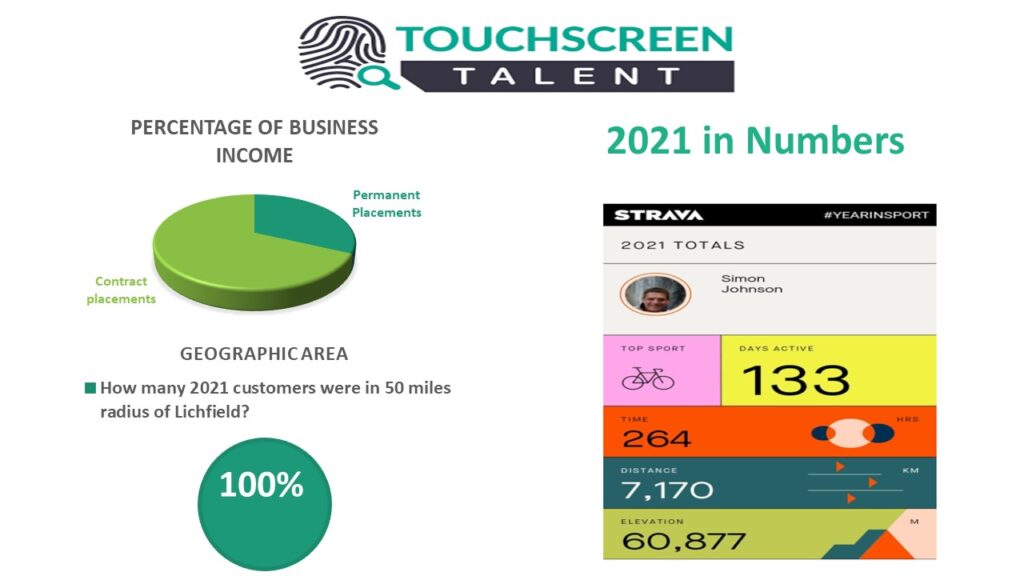
Another Challenging year yet we came through it stronger and are now better for it.
Thank you for your support.

When writing your job description, have you considered the feeling and emotions people will feel when reading the advert? Here are some tips on diversity and inclusion to help you maximise the effectiveness of your advert and to also project the correct tone to the desired audience and those that may be your leaders of tomorrow.

Like gender bias, racial bias can be implicit and frequently is unknowingly perpetuated by recruitment professionals. But some careful attention to words and phrases used can help eliminate implicit and explicit bias and increase diversity.
According to an Internal Report by a leading Technology company, women will typically only apply for a job if they meet 100% of the qualifications. To avoid unconscious gender bias deterring women from applying to your jobs, consider eliminating requirements that are not essential. If the position is one where training can easily be provided, don’t insist experience in a specific software suite. Generalise areas where transferable skills are okay, and clearly outline which qualifications are required, which are strongly preferred, and which are nice to have.
Agree, empathise, sensitive, affectionate, feel, support, collaborate, honest, trust, commit, interpersonal, understand, compassion, nurture, and share.
Aggressive, confident, fearless, ambitious, decisive, head-strong, assertive, defend, independent, battle, dominant, outspoken, challenge, driven, and superior.
The UK has been reporting about an aging workforce. A third of workers are over 50, with people spending on average 7 years longer in the workforce than in the 1970s , according to a report from Human Resource Executive. Some best practices for avoiding age discrimination include making sure your employer branding reflects a wide range of the age of workers at your company.
Additionally, avoid loaded phrasing like:
Make sure your job postings are welcoming to workers of all abilities by advertising when there are accommodations like flexible hours or tele-work policies that would appeal to workers with disabilities. Let applicants know your workplace welcomes and values all candidates with phrasing like: “Ability to complete tasks with or without reasonable accommodations.” Instead of writing “Access to your own vehicle isn’t always necessary”, try “Access to reliable transportation,” which is more inclusive to people with disabilities.
Don’t make people ask you about parental leave, flexible working practices, benefits like health insurance – some people won’t feel they can, for fear they’ll be judged. Placing these initiatives in plain sight shows you are an employer who takes diversity, flexible working and inclusivity seriously – and will make you a much more attractive option for job seekers. They’ll better understand your company values align with their own and feel comfortable exploring working with you. Tell candidates proudly you’re an equal opportunities employer.

If you want to hire the right person, you need a crystal-clear picture of the type of employee you are looking for. Your job description must go beyond just experience and education to include work and character traits that can impact a person’s ability to thrive in your company.
Every hiring plan should be based on these features:
The job – What will the person do? Take the time to spell out the specifics of the open job. Start with the job title it should be descriptive and conform to standards for your industry. If your company calls staff at a certain level in the hierarchy Executives whilst everyone else calls them Coordinators, then your advert is likely to be overlooked. Come up with a summary of four or five engaging key duties that will be performed. Think this through thoroughly as a hazy or incorrect description will make it harder for you to match a candidate. If you find it difficult to understand or interesting, why would someone else?
Candidate experience – What background is required to get the job done? Is Industry familiarity needed? What practical knowledge, academic qualifications, professional certification – these may all be crucial to helping you screen candidates you recruit – are key to the role? Clarify ahead of time the specific experience your ideal candidate should have and set minimum criteria where possible. The criteria needs to be loose enough to encourage diverse applications, but strict enough to dissuade undesirable candidates.
Candidate skill – What unique skills must the person possess? Look at the duties the person will perform and assess what skills are required to complete those tasks. An IT Developer, for example, will need good analytical skills and may also need to be a team player, whilst a call centre team manager may need leadership skills and project planning ability. Your list should include hard skills (what the person knows) and soft skills (how the person applies that knowledge).
Working Style – How will the person get the job done? In a small business, the way a person works can be as important as what they do. They will need to mesh with your corporate culture and the team you currently have in place. For instance, a person who thrives off the energy of others won’t succeed in a company where everyone works solo. Try to get across the general working methods so candidates know what they’re letting themselves in for. Manage expectations at the start and they’ll thank you for it later on.
Candidate temperament – What kind of personality succeeds in your organization? Taking working style a step further, consider the attitudes and manners you want in a job candidate. Your goal will be to find the type of person that is most productive in the work environment you have created and who can complement your current workforce. Develop a list of the character traits you most value, things like sense of humour, honesty, compassion, etc. Remember, this will vary from department to department too. You might not list these in your recruitment advert, but they can help you choose between candidates after more in-depth interviews and screening.
Call to action – Ensure that all interested applicants know how to apply for the job. Who they contact and when they should receive some form of communication must be included. The perfect candidate can be lost to a poor recruitment process.
Getting your job description right is a vital part of attracting the right candidates and reducing the time it takes to screen and hire. When advertising a new vacancy, please don’t be tempted to just dust off an old description and reuse it; go through the process every time to ensure you get the right person for the job. In time, people change, managers change, skills evolve and even if the job title is the same, chances are the person you bring in will be unique and required to address the challenges of today and not those it was originally designed for in the past. Do the right thing for today, for the people of today.

It is a great feeling to be surrounded by a group of people who share your values, work ethic, passion and who will inspire you as well as you are inspiring others. As the job market begins to wake up, when will you act to find your new home to do what you love to do?
One thing the pandemic has taught us is that your mental well-being is finely balanced and is influenced by several factors. Finding a great place to work and do the things you love doing is one of them. The market is certainly showing signs of recovering so what are you waiting for? Act now and be happier! You deserve the best, not just to settle…
Recent CRM data shows several significant increases in activity:
People are trying to find a new home – website visitors are up 53% YoY
Businesses with more than 200 employees saw an increase of 63% in their web traffic
There was a 51% increase in the number of leads generated in March compared with January
The number of people buying IT & Software Services has shot up by 153% which is an 86% YoY growth therefore the actual number of business deals is also up by 34%
Sectors in IT & Software Services, Media & Marketing and Consumer Products have seen the largest growth during Q1.
“There are decades when nothing happens and weeks when decades happen” – Lenin
Against the backdrop of an ageing workforce, the war for talent is at crisis point as employers around the world fight for a shrinking pool of talent; but is this a recent trend?
Even before the current crisis, changing technologies and new ways of working were disrupting jobs and the skills employees need to do them. In 2017, the McKinsey Global Institute estimated that as many as 375 million workers —or 14 percent of the global workforce—would have to switch occupations or acquire new skills by 2030 because of automation and artificial intelligence. In a recent McKinsey Global Survey, 87 percent of executives said they were experiencing skill gaps in the workforce or expected them within a few years. But less than half of respondents had a clear sense of how to address the problem.
McKinsey also report that the coronavirus pandemic has made this question more urgent. Workers across industries must figure out how they can adapt to rapidly changing conditions, and companies must learn how to match those workers to new roles and activities. In our view, this dynamic is about more than remote working—or the role of automation and AI. It’s about how leaders can reskill and upskill the workforce to deliver new business models in the post-pandemic era.
To meet this challenge, companies should craft a talent strategy that develops employees’ critical digital and cognitive capabilities, their social and emotional skills, and their adaptability and resilience. Now is the time for companies to double down on their learning budgets and commit to reskilling. Developing this muscle will also strengthen companies for future disruptions.
Is this switch towards inward investment arriving at the right time? Especially when companies are struggling to stay afloat, it doesn’t seem to be very appropriate for employee upskilling and reskilling, right? Wrong. Forbes reports that it is often misconceived that during tough times employees need to do what they have to by utilizing their current skills and not thinking about how to expand their skill set. This is especially not true during the crisis of 2020 as its effects have been extremely uneven across different industries and functions. We’ve already seen the major changes that the Covid-19 pandemic have brought upon the economic landscape and, with them, the demand for new approaches to mobilizing your existing talent base.
Perhaps one of the most dramatic impacts of the pandemic has been the unprecedented numbers of furloughed or laid-off employees and high unemployment rates. However, in a time when even major industries cannot afford to hire new talent, it is crucial to invest in a workforce adaptable to market changes. At Touchscreen Talent, we believe a blended workforce approach to achievement commercial goals is critical and something that companies must evolve as we enter the new financial year.
Do you know? 78% of employees say they are ready to reskill. The question is not who can adapt, but how best to develop an adaptable workforce.
Mercer’s 2020 Global Talent Trends Study also reveals that current realities and unresolved debates weigh us down, even as we see a future full of opportunities in this new decade. An opportunity which, for now, seems halted by COVID-19. The changes we are witnessing, brought about by uncertain times, are not only disrupting our present but will set a new normal in how we live, work, operate, and do business. It is down to business to invest in our people at not focus on jobs.
PwC take this further and asks “So what should we tell our children? That to stay ahead, you need to focus on your ability to continuously adapt, engage with others in that process, and most importantly retain your core sense of identity and values. For students, it’s not just about acquiring knowledge, but about how to learn. For the rest of us, we should remember that intellectual complacency is not our friend and that learning – not just new things but new ways of thinking – is a life-long endeavour.” Blair Sheppard Global Leader, Strategy and Leadership Development, PwC
Organisations can’t protect jobs which are made redundant by technology – but they do have a responsibility to their people. Protect people not jobs. Nurture agility, adaptability and re-skilling. All these may seem common sense but are you doing them, are you taking care of your people?
With a few regional exceptions the world’s population is ageing, putting pressure on business, social institutions and economies. Our longer life span will affect business models, talent ambitions and pension costs. Older workers will need to learn new skills and work for longer. ‘Re-tooling’ will become the norm. The shortage of a human workforce in a number of rapidly-ageing economies will drive the need for automation and productivity enhancements. This is also true of the those entering the workforce. Developing skills to affectively work alongside and possibly manage people who are more mature in years in the future is also key to an organisation’s success. Will the job market remain static and will we see jobs created now that we’ve never heard of before? In short, Yes!
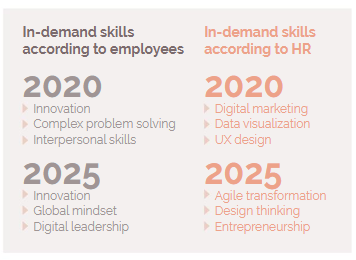
Data shows the total number of skills required for a single job has been increasing by 10% year-over-year since 2017. Furthermore, one in three skills in an average 2017 job posting in IT, finance or sales are already obsolete. Emerging skills gaps due to ongoing business disruption and rapidly evolving needs have accelerated because of the COVID-19 pandemic.
During 2019 in the UK, the talent war was so devastating that businesses had to spend more than £4.4 billion on temporary staff, recruitment fees and training to drive productivity and plug the skills gap, according to The Open University’s Business barometer report 2019.
“Many organizations have focused on talent acquisition to get the skills they need, however a 2020 survey revealed that 74% of organizations froze hiring in response to COVID-19,” said Alison Smith, director in the Gartner HR practice. “In today’s environment, hiring is not possible for many organizations. Instead, companies can look at current employees who have skills closely matched to those in demand and utilize training to close any gaps.”
Since December 2020, there was a short and sharp burst of activity allowing those out of or seeking work to secure valuable Permanent and Fixed Term Contract roles. During January 2021, the market started to show some signs of recovery, yet it was slow and highlighted the trend that companies were hiring for jobs rather than addressing the business problem. This is continuing into March 2021. Too many companies are replacing those who are leaving and trying to replace them with an almost identical candidate. Is this the best course of action? If you are offering career development, how do your current people see it? Can they tell their friends and family, and their leaders develop their people?
There is so much evidence and reports explaining where the challenges are right now, the data is pointing towards inward investment. It would love for you to engage and begin to build new strategies to focus on the business challenges and the skills your people need to build a brighter future. Investment in learning is key and will save you money, improve productivity and enhance your culture. Are you ready for change?
To understand how we can help you make some of these important decisions, please reach out to learn more.
What an exciting year ahead, for sports fans! We have got:
There is plenty to look forward to for sports fans and something for everyone, but the big question is, can we go and watch?
COVID-19 is still playing a huge part in our lives and is leaving its footprint on the economy and the nations mental wellbeing. In our opinion the health and welfare of the nation is hanging in the balance and requires the nation to dig deep in its resolve reserves to prepare us for the year ahead.
Who would have thought Boris Johnson’s announcement of Lockdown 3 was going to be the first talking point of the year swiftly followed by the much-anticipated news of vaccines and the plans to roll it out across the UK?
With economic support now in place until April, there are plenty of questions surrounding the strength and speed at which the economy can bounce back.
In terms of the job market, permanent job vacancy placements have seen an increase at the beginning of January 2021, and this is supported by data coming from the REC and Markit.
What are the forecasts for 2021? What trends, if any, will we see and can we predict accurately.
In our view, companies will face the same issues that have for decades: do things quicker, save money, be innovative, win more business, look after its employees and be profitable.
This is a constant state yet the methods of achieving these outcomes will differ slightly from the past. In recruitment terms, 2021 may see the following:
From a technology and business process perspective, resulting from having pulled away from the EU and an increasing number of people working remotely, we predict increases in:
It may well be that we begin to gather pace from mid-February into March and if half of these topics are covered, we will be in for a productive and busy year. For now, keep safe and keep healthy. Wishing you all the prosperity and good fortune for 2021. #2021 #greatyear #covid19 #2021forecast
One positive to come out of Covid19 is the increasing number of people who now have the flexibility to work from home. An aspect of balancing the demands of work and life that some people have been craving for some time. Other people, on the other hand, are wondering what all the fuss is about as they have been doing so for some time.
With this increased demand placed on private networks, will there be other long COVID-19 issues in the future that may not be obvious right now?
Will the best candidate for the job no longer possess the best skills for the role but have a fast, reliable, and stable private internet connection? Will future job seekers suffer as a result of not having adequate equipment and bandwidth? What long term economic effects could this have on us?
Will students, of all ages, in the current education system suffer longer term and not fulfill their potential because of inadequate tools today? This is not just about being able to complete a few online consent forms or attending a Zoom meeting.
Can questions be raised about parts of society today, who may suffer health complications in the future because they are unable to access digital platforms today? As we progressively move more and more to digital platforms, are we taking enough time to glance behind to see if anyone is left behind?
There must be ways to recycling or upcycle office equipment that is upgraded every few years and getting this into the education system and parts of society who may need it the most.
We would love to hear and see your views on this. There way be people out there in the business world who may already be addressing this possible future challenge and if there is, we are keen to engage with you.
#Digital #technology #education #digitalpoverty #touchscreentalent
